After five long years apart, Grace* (34) thought reuniting with her husband abroad would finally complete the picture of the life she鈥檇 been waiting to live. But what awaited her in the US was far from the dream she鈥檇 built in her head.
In this story, she opens up about the lonely years apart and the bitter truth she uncovered when she arrived.
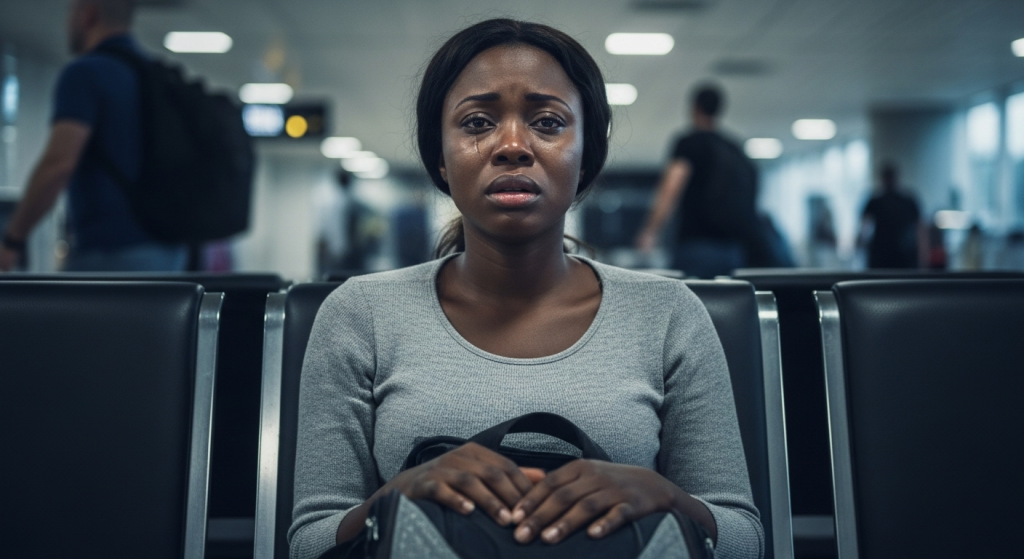
This is Grace鈥檚 story as told to Mofiyinfoluwa
That morning, when the ICE officers came to take me away, I had been sitting with Esther, telling her how scared I was. I didn鈥檛 think I could survive in a foreign country illegally, without money and a job. She kept rubbing my hands in hers, assuring me that we鈥檇 find a way 鈥攎aybe I鈥檇 pick up some under-the-table work until my husband came around.
We were still talking when a loud knock came at the door. Esther jumped up, thinking it was the pizza she鈥檇 ordered. She opened up to meet two white men dressed in plain clothes. Before either of us could speak, they flashed their badges.
When they showed me a printed sheet with my name and photo, I felt goosebumps crawl over my body. They asked if I knew my visa had expired. I tried to speak, but the words wouldn鈥檛 come. Esther tried to explain that it was all a misunderstanding. She said she could vouch for me. But the officers only shook their heads. They said they鈥檇 received a notification about an overstay.
They were polite, but their tone had a firmness to it that made it clear I had to go with them for 鈥渜uestioning.鈥� They let me step back inside to change. For a moment, I thought about bolting out the back door, but what would be the point?
Outside, they guided me gently to their car while Esther followed, begging them to let me be. Her pleas fell on deaf ears.
In the two and a half months since my visa expired, I鈥檇 imagined this moment in every dramatic way possible: chaos, shouting, maybe even handcuffs. Instead, they were surprisingly kind, almost like friends inviting you out for a drink.
As the car pulled away, I stared out the window, numb with the painful realisation that the man I鈥檇 crossed oceans for sent them to my door.
***
I met my husband, Kola*, in 2014 during our NYSC at Area 1 Local Government, Abuja. We were signing the attendance sheet when he leaned in, introduced himself, and said he鈥檇 seen me around. Before we could talk further, my friends pulled me into their chatter. That evening, a message popped up on my phone screen from an unknown number 鈥� it was Kola. He had copied my number from the sheet. I should have dismissed him like I did other male corps members, but his boldness melted my heart.
Kola wasn鈥檛 my usual type, but his sweetness made up for it. He鈥檇 call late using MTN鈥檚 midnight bundle, talking about his day until we fell asleep. Within three weeks, we were speaking every day.
At our weekly CDS meetings, he always saved a seat for me, and I found myself smiling at how neatly he dressed. His shirts were crisp, paired with white socks and spotless sneakers. He looked like someone who had his life together, someone you could build a future with. By the end of our service year, I鈥檇 fallen completely for him.
We stayed together after NYSC. I liked that we shared values and that he respected my choice to wait until marriage. We talked about the future a lot. Soon, I landed a bank job while he searched for work with his biochemistry degree.
My mother worried at first about her last child marrying an unemployed man, but Kola won her over easily. He visited often and helped her with errands.
In 2016, after he finally landed a job as a lab scientist, he asked for my hand. By December, we were married.
From the beginning, Kola talked about leaving Nigeria to pursue a master鈥檚 and better opportunities in the medical field. I was more cautious, preferring to build a foundation at home 鈥� buying land, saving, starting small 鈥� but he was restless. By the time I found out I was pregnant with twin boys in 2017, he was already writing exams and applying to schools overseas.
By 2018, he got into a university in Florida with a partial scholarship. Tuition, visa fees, and flights were beyond our means, but I could see how much it meant to him, so I offered to help. My job at the bank provided me with access to a low-interest staff loan, and I viewed it as an investment in our future. He鈥檇 go first, settle in, and bring us over.
The day he left came faster and felt heavier than I expected. He insisted on matching outfits鈥攈is a simple blue kaftan, mine a fitted dress with rumpled sleeves. We dressed the twins and took quick pictures, though my smile barely reached my eyes.
At the airport, the crowd buzzed with excitement and tears, but all I heard was my own heartbeat. Watching him walk away felt like something inside me was being torn apart. I held our toddlers close as they cried, whispering that Daddy would call soon and wouldn鈥檛 be gone for long.
At first, we managed. We called and video-chatted every day, laughing about his new experiences鈥� the cold, the oddness of everything, and how his skin reacted. I could tell he missed me as much as I missed him, and talking to him made my day brighter.
But slowly, things began to change.
Within months, calls became shorter and texts became less frequent. He said he was busy, and when the pandemic hit, he became even more distant. We argued a lot more. I was still paying off the loan I鈥檇 taken for his studies, half my salary gone each month, yet the money he sent barely covered the basics.
After every argument, I鈥檇 be the one to apologise. Some nights, after putting the children to bed, I鈥檇 sit on the balcony scrolling through old chats, smiling at his silly messages. He used to tell me everything. Now his messages were vague, only detailing how difficult his life had become.
Still, I clung to the hope that in 2021, he would finish his master鈥檚 and send for us.
When that time came, I felt hopeful again, thinking it was finally our turn to be together. But he insisted things weren鈥檛 going as planned. Even with a work permit, the post-pandemic job market was tough, and he only found work as a taxi driver. I waited patiently, even as months stretched into a year.
Later, he began discussing the possibility of moving to Canada, stating that his chances would be better there, though it would take longer. I didn鈥檛 argue, but I could feel him slipping away. The twins often asked when they could see their daddy again, and I never had an answer.
By January 2022, he had been gone nearly four years. Around that time, he moved into a flat with a Nigerian couple and gave me the wife鈥檚 number in case I ever needed to reach him urgently.
From our first conversation, Esther was warm and friendly in that familiar, easy way that makes you feel like you鈥檝e known someone for years. She was about my age, and her son was around the same age as the twins. We bonded quickly, talking about motherhood, work, and life as Nigerian women abroad. I told her I hoped to join Kola soon, and we chatted about schools and housing; I even sent her clothes in the winter. It felt good to have her as a friend.
As Esther and I grew closer, our conversations shifted. She鈥檇 ask if there was any update on my move, and when I mentioned Kola鈥檚 plan to move to Canada, she frowned at the idea. She said it might be easier for me to settle things in the US 鈥� that long-distance marriages rarely survive this long. At first, I didn鈥檛 pay too much attention, but her words started to stick.
Around the same time, my mother began pressing me. She said four years was too long for a man to live apart from his wife and children. Between her words and Esther鈥檚, I began to think deeply about my situation.
I decided to start saving for the move on my own. I was tired of my banking job and the monotony of life in Nigeria. When I told Kola about my plans, he dismissed the idea, saying he wanted to do things the proper way and would send for us when the time was right. Still, he refused to give a clear timeline.
By 2023, I鈥檇 made up my mind. Esther convinced me to surprise him. She said seeing me in person might make Kola take our family鈥檚 relocation more seriously. Her cousin鈥檚 wedding in June provided the perfect opportunity鈥� we used the invitation to apply for a two-month tourist visa. My mother agreed to care for the children while I was away, and I sold my car to raise money for the trip. All the while, Kola thought I was still waiting in Nigeria.
When I arrived, Esther was waiting for me at the airport. Seeing her in person felt surreal. I couldn鈥檛 stop thinking about the day Kola left Nigeria. Five years later, I was the one arriving, and he had no idea.
As we drove to his apartment, Esther called him. He answered on the first ring, something he hadn鈥檛 done with me in months. He hadn鈥檛 even taken any of my calls all evening. She told him I was with her and had come to the US. There was a long silence, then he asked if it was a joke. When she handed me the phone, I confirmed it was me.
He stayed silent for a moment before saying he would be home in two hours. His tone was flat, neither excited nor surprised.
When he walked in that night, I tried to hug him, but he stood still. His body felt heavy against mine, and for a moment, I wondered if this was the same man I鈥檇 been waiting for. He looked older, rounder: I couldn鈥檛 remember if he had always looked that way. His first questions weren鈥檛 鈥淗ow are you?鈥� or 鈥淗ow was your flight?鈥� He only asked why I had come without telling him and about my job. When I said I had quit, I could see deep lines of pent-up anger form on his face.
I鈥檇 imagined so many versions of our reunion: how he鈥檇 lift me up and tell me he loved me, how we鈥檇 spend the night catching up on the years we鈥檇 missed, and how we鈥檇 warm ourselves in each other鈥檚 company. Instead, we spent the night with our backs turned to each other, almost like strangers forced to play house. In the days that followed, his behaviour only got worse. He left home early and returned late, always saying he had rides to complete. I told myself work might be hard, that he was stressed, but deep down I knew something was off. He treated me like I was invisible, and I couldn鈥檛 understand why my showing up unannounced was such a grave offense he couldn鈥檛 forgive.
Two weeks later, I broke down in front of Esther and told her everything 鈥� the distance, the coldness, the silence. She sighed deeply before revealing something she had kept from me. When Kola first moved into their apartment, she said, he lived like a bachelor. Women came and went, sometimes even sex workers. He only stopped bringing them home when her husband complained about the noise.
I sat there shaking, feeling like my chest was splitting open. Still, a part of me wasn鈥檛 surprised. He had barely touched me since I arrived.
That night, when he came home, I confronted him with everything I鈥檇 heard. He didn鈥檛 deny it. He looked straight at me and said, 鈥淎nd so what? You think I鈥檇 stay five years without a woman?鈥�
I just stood there, frozen. But he didn鈥檛 stop; he needed to break my heart into finer pieces. So, he struck harder.
鈥淵ou鈥檝e never satisfied me. Even before I left Nigeria. You just lay in bed like a log of wood.鈥� Hearing those words from the man I鈥檇 waited five years for felt like a knife twisting inside me. After that night, everything fell apart completely.
The distance between us grew unbearable. He stopped pretending to care. When I brought up legalising my stay, he shut it down immediately. He said he wouldn鈥檛 process anything for me because he didn鈥檛 want the kids growing up in America. He claimed they鈥檇 end up spoiled. Every conversation ended with him shouting and saying hurtful things.
Then one afternoon, in the middle of another argument, he told me he didn鈥檛 want the marriage anymore. He said we weren鈥檛 compatible and had only been pretending from the very start. I begged him to reconsider, but he was firm. When I refused to leave and his flatmates supported me, he packed his things and walked out.
I thought he鈥檇 come back after a few days, but he never did. When he stopped picking up my calls, I began to panic. Every attempt to reach him through family and friends failed because Kola had cut everyone off.
By then, my visa had expired for over a month, and I was stranded: no husband, no money, no papers.
For weeks, I could barely get out of bed. I had left my children, my job, my whole life behind, only to be abandoned in a country that still felt strange. My family in Nigeria began sending me money to get by, and Esther urged me to hold on a little longer. She said I could find some small under-the-table work, save, and later legalize my stay to bring my children over.
I was still weighing my options when we heard the knock that changed everything.
***
The holding centre was cold and impersonal. I sat for hours, unsure what would happen next. Eventually, an officer asked if I wanted a lawyer or to opt for voluntary departure. I didn鈥檛 understand until Esther whispered that it meant I could buy my own ticket and leave within weeks instead of being detained and deported.
I chose that option, but they wouldn鈥檛 release me until I had the money, so Esther helped me call my family. We signed several documents, officers were assigned to escort me, and by the time I finally left that night, the sky was pitch black, mirroring the emptiness I felt inside.
The two weeks before my departure were a blur of tears and sleepless nights. Deep down, I knew Kola reported. Who else had my exact address?
I called and messaged him about my deportation, but he never responded. His silence confirmed my suspicion.
Esther cried the day I left. She apologised over and over, but I told her not to blame herself. The fate of my marriage had been sealed long before I came.
The flight back to Nigeria was long and quiet. I stared out the window until the clouds blurred and my eyes burned, unable to believe that after everything, I was returning empty-handed. I鈥檇 imagined welcoming my children to a new life, not leaving behind the ruins of my marriage.
Back in Nigeria, I slipped into a deep depression.
I moved in with my mother and stayed indoors for weeks, unable to face anyone who might ask questions. But when they eventually found out, something unexpected happened: no one judged me. I was met with quiet compassion. The same church members I had been too ashamed to face began showing up at my door. They never asked questions, though I could tell they already knew. They brought food, prayed with me, and sat with me in silence. They treated me like a widow 鈥� and in many ways, that was exactly how I felt.
It鈥檚 been over a year now. I鈥檓 rebuilding my life, one small piece at a time. I finally reached Kola about a divorce, and he agreed without hesitation, like he鈥檇 been waiting for me. But when I asked him to resume financial support for the children, he said he wanted custody. He claimed he no longer trusted me to raise them and wanted them sent to his parents in a remote village in Oyo. Those people have only seen my children once. I told him I鈥檇 never allow it. I鈥檓 ready to fight this to the very end.
This past year has forced me to grow in ways I never imagined. I鈥檝e come to believe that everything happened exactly as it was meant to. Maybe I needed to lose everything first, to finally find the strength to move forward with my life.
Read Next: I鈥檓 Happy With My Boyfriend, But I Wish I Treated My Ex Better