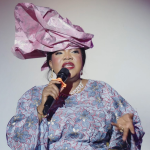
It’s been for Rema鈥檚 Ravage Uprising concert. The consensus about that show is that the 24-year-old Benin-born singer is celebrating Benin heritage. Take his replica of the 1897 Benin sacking, like Queen Idia’s ivory mask, into account. The fact that the show happened nine miles from the British Museum displaying the stolen Queen Idia’s ivory mask and a note that Ravage Uprising was Rema鈥檚 only show in the coloniser鈥檚 UK in 2023, it’s not hard to agree with.
Critics have written adulations. Rema has thrown himself into the narrative. He鈥檚 tweeted about reshaping the Benin culture and a song titled BENIN BOYS with Shallipopi, another Benin boy. Rema adorned bats, a popular symbolism attached to Benin, into his jewellery collection and new album art. He鈥檚 claiming his birthplace with his full chest. However, the importance of symbolism might have been exaggerated. Bats don’t fly around the whole of Edo, and neither are they depicted in Benin guilds. Perhaps he should have spared a thought for leopards depicted in Benin guilds.
Rather than a connection to the centuries past, Rema鈥檚 inspired by Benin City’s urban life and culture (which has adopted bats into its identity). That narrative only teases listeners into the geographic-fluid afro-pop pits of his sophomore album, 鈥淗EIS鈥�. He’s not playing it safe. This isn’t 鈥淩ave & Roses鈥�. In comparison, his first album鈥檚 the rose, and this new one鈥檚 the rave. To appreciate 鈥淗EIS鈥�, the search for homecoming aspirations and deeper music is seriously not advised. 鈥淗EIS鈥� is pacy, head-back-leg breaking, and ridiculously amplified. It’s the complete form of what Ginger Me, Won Da Mo, Hov and the 鈥淩AVAGE鈥� EP have shown. 鈥淗EIS鈥� is the wildly experimental Rema.

MARCH AM is a colloquial phrase for 鈥渄oing the work and crushing it.鈥� The corporate world will translate that to meeting KPIs. In Rema’s case, he’s a young overachiever. While one simmers in celebrating that, one observes his new linguistic approach, which is all over the album. He uses English, Pidgin English, Edo and Yor霉b谩 in cruder tones. A marker of every man’s voice. American rapper Mick Jenkins said, 鈥淒eep conversations about language, which one [do] you speak?鈥� Remaspeak is street-fluent and internet lingo rich.
He rides the party into AZAMAN, originally an Edo slang term for someone who provides bank details for G-boys to pick funds. In this song, it translates to the popular Nigerian term for a 鈥渞ich spender鈥�. In a praise-singing mode, Rema hails Nigeria’s wealthiest men, including his state governor, Benin royal throne, and Don Jazzy. Rema sure knows how to pick his patrons. Interestingly, there鈥檚 no mention of his Jefe, DPrince, who discovered him.
This praise-singing doesn’t sidestep Rema鈥檚 noteworthy consumption of X (Twitter) lingos. 鈥淣o go hustle, dey talk for TL / Follow me run, you go tear ACL鈥� is a banger boy material.
Twitter might have been a bit of this album’s inspiration. From 鈥淣o go hustle, dey Twitter dey zozo鈥� on the opening track to 鈥淢onday morning, talking about me while I’m making money鈥� on HEHEHE, the playful third track, that observation lurks. He clap-backs at his trolls and critics; this psychologically marks a reflexive response likely provoked by internet pressure and stan wars. It’s not crystal clear to him yet breeds contempt.

On YAYO, he bites Asake’s style and comfortably holds the form. This is a jam; Mr. Sungba will be pleased. BENIN BOYS with Shallipopi follows in quick verse exchanges. The most notable thing about this song is the repetitive 鈥淪ee money, see am, see, see, see money o鈥� chorus, subtle Edo music influence, and Shallipopi being the first Nigerian feature on any of Rema’s songs.
Surprisingly, Bini’s heritage isn’t expressed on HEIS, the album track. The word is the Greek for 鈥渘umber one.鈥� On it, Rema sings he’s THE guy. The chorus is rhetoric in Swahili, asking who’s the baddest. Who’s uplifting and hot and globetrotting? Who’s the shit and champion? Is it you? Rema’s confidence is stunning; he generates closing lines like 鈥淲hen I talk 鈥淎nother banger,鈥� you better believe am.鈥�
It鈥檚 not hard to miss P.Priime’s tag, which runs through six songs on this eleven-track album. This is evidence of their developing chemistry since their back-to-back collaboration on the 鈥淩AVAGE鈥� EP. Rema’s go-to producer, London, takes the backseat on this album ride, credited on only three songs. According to metadata, this album鈥檚 also the first time Rema has deeply involved himself in the production of his music. Other co-producers are Altims, Daytrip, Producer X, Cubeatz, Deats, Klimperboy and Alex Lustig.
Rema’s clearly synced with what’s vibrating in the ghettos and inner cities. manifests in OZEBA, an Edo word for “entering trouble”. 鈥淢ara鈥� is an informal term for madness. In music, it’s a homegrown sound that drives listeners wild. It’s high-speed and energetic. Picture a street carnival buzzing with DJ YK Mule’s mixes, dancers in ripped jeans, joggers, oversized round necks and sweaters, cross bags, sandals, designer slides, flipping white handkerchiefs in the air while thick Indian hemp joints burn on the other hands. OZEBA is trenches music brought to the global mainstream. The only thing missing is .
From this song till the album ends, Rema retains the disruptive energy of Daddy Showkey鈥攖he new age composition of Olamide Baddo’s lamba. WAR MACHINE is an adrenaline pumper; it gives the thrills of street racing. Rema might have also been a new-age pop version of Obesere on EGUNGUN. He keeps on rocking on VILLAIN 鈥� repeating everything earlier said on the album, from accomplishments to soft-landing baddies, rocking designers and lavishing. His confidence leaps higher here; he desires babes built like the Afrobeats鈥� Queen Idia, Tiwa Savage.

Decrescendo hits on the closing track, NOW I KNOW. The rave has come to an end, and others have left. His trauma and loneliness are all that’s left. This song’s a fine moment of clarity on the album, and one wishes it had more of it.
In 28 minutes, Rema sets a party for loud decibel suckers. It’s very experimental music, while someone like Ayra, his label mate, has a clear-sounding sophomore. Bold of him. It’s also a statement that Rema has a freer handle on his career. He notes on NOW I KNOW: 鈥淚 dey move like Messi when he dey for Barcelo[na].鈥� That’s one way of saying he’s unfuckwithable.
While it’s true Rema’s music is becoming uncontrollably uncouth, his music has never been suburban. He’s only talented and cool enough for the butte and pako. He’s called the 鈥淧rince of Afrobeats”, which makes sense. But what Rema and the other top three, the kings of Afrobeats, have in common is the love for the Black app. Rema should grow thick skin!
Closer listening reveals 鈥淗EIS鈥� more native allegiance than a musical revolution orchestrated by the Mid-Western Nigeria鈥檚 tapestry. Another evidence of this is Shallipopi鈥檚 widely critiqued sophomore. What these two album releases heralded by the Benin/Edo fixation represent and share in common are apprehensive party music and cruise talks.

Is a Benin renaissance happening? Is 鈥淗EIS鈥� a special nod to Benin? Is the album by Rema’s hedonism, inspired by his critics or his desire to shift mainstream focus from Amapiano to Afropop? Maybe, maybe not.
You have to agree, though, that Rema has given Benin as a whole more points than his Governor Obaseki.