Abdulmalik Oladipo bought a SIM card sometime around June 2026, and like any normal person, he registered it and started using it. A few weeks later, calls and messages began coming in from loan apps. They addressed him by another person鈥檚 name and demanded payment for a loan he said he never took.
鈥淚 am not this person. My name is Abdul-Malik,鈥� he told one caller.
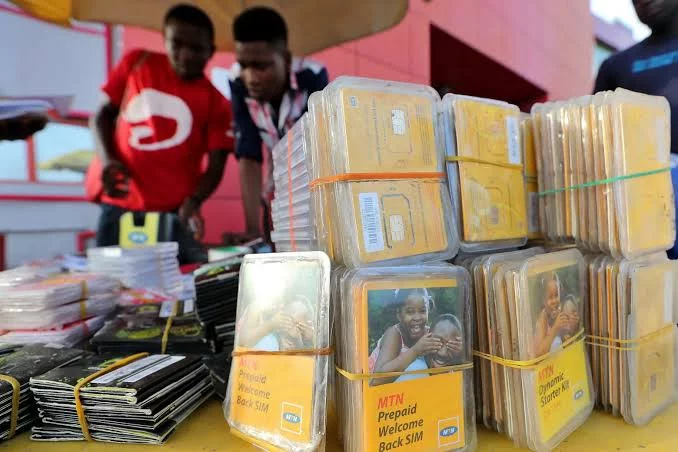
But the caller did not believe him. Abdulmalik said the person threatened to publish his name and picture on social media. He kept receiving calls from different people working for the loan apps, even after explaining that he had only recently bought the number.
The calls became so frequent that Abdulmalik had to put his phone on Do Not Disturb (DND). One day, he returned to the shop where he bought the SIM, but a staff member told him they could not help.
鈥淚t is what the network provider gives us that we sell and register,鈥� the staff member told him. The number of spam calls he got became so frustrating that he had to stop using the number altogether.
Abdulmalik鈥檚 experience points to a problem with recycled phone numbers in Nigeria.
How does this happen?
When a person stops using a number, a telecom company will assign it to someone else after a while. But if the information on the SIM is not properly cleared, the old number may still be linked to the previous owner鈥檚 loan apps, information, bank accounts or other personal records. The new owner then inherits calls, messages and, in some cases, suspicions over things they know nothing about.
The problem is not limited to harassment by loan apps. On October 16 2026, The Guardian that a woman, Mariam Titilayo, was arrested after buying an Airtel SIM that had allegedly been used in a kidnapping and murder case before she owned it. The report said Airtel later confirmed that the line was still linked to the previous user, and Mariam was eventually cleared.
The problem has also left some families dealing with repeated arrests. In a seen online on November 5 2026, a woman identified as Diamond Opor accused MTN of negligence and emotional trauma after her father was arrested twice over a SIM card he bought from one of its shops. She said her father bought and registered the number with his National Identification Number (NIN) on July 28 2025.
According to her, the Department of State Services (DSS) arrested him on November 30 2025, over a crime allegedly committed by the number鈥檚 previous user. He was detained until December 2 of the same year. The family thought the matter was over after his release. But on October 30 2026, Interpol invited him for questioning over the same case. She said five other people her father had called from the number had also been picked up.
The woman claimed Interpol told them the system had not been updated to show that the number had been reassigned, and that the DSS had not informed other agencies of the earlier arrest. She said her father now lives in fear of another arrest and that the experience has affected his health and the family鈥檚 peace of mind. The family says it has evidence of both arrests and is considering legal action against MTN.
Another case involved a man, Anthony Okolie, who was for ten weeks in 2020 after activating a recycled MTN number previously used by the daughter of former President Muhammadu Buhari. These cases showed how a phone number can carry a previous user鈥檚 history into the life of someone who has just bought it.
How does a number get recycled?
The NCC鈥檚 of 2024 set a waiting period before a phone number can be reassigned. Under Part 2 of the Rules, a line that is not active for six months may be partially barred.
The subscriber can still receive calls for another six months. If the line remains inactive throughout the 12 months, the network provider may withdraw it and return the number to its pool for reassignment. This means a number should generally remain inactive for 12 months before it can be recycled.
So when a subscriber stops using a line, the network provider may eventually . That means a new customer can receive a number that belonged to someone else.
But trouble starts when the network provider doesn’t update its records to reflect the change. A bank, loan app or online service may still treat the number as belonging to its previous user. Messages and calls meant for that person can then reach the new subscriber.
The new owner usually has no way to contact the previous user or prove to every organisation that the number has changed hands. And when a caller refuses to believe them, the burden falls on the wrong person.
What is the NCC doing?
On Wednesday, March 26 2026, the Nigerian Communications Commission (NCC) it had introduced the Telecoms Identity Risk Management System (TIRMS) to let authorised organisations check whether a number is active, has been swapped, reassigned or has another status.
The NCC the system should help reduce risks associated with recycled numbers. It also advises people who receive messages meant for a previous number owner to contact the relevant service provider and avoid sharing or using the information.
But the existence of a system does not show that it works for people like Abdulmalik and Mariam. The NCC needs to explain which organisations can check the system, whether banks and loan apps currently use it, and what happens when the network providers or organisations fail to update their records.
The Big Daily is your weekday shortcut to the biggest news shaping Nigeria. We cut through the noise, connect the dots, and explain why the news actually matters, all in one quick read.
Will a longer waiting period fix the issue?
On April 28 2026, the House of Representatives on the NCC to consider extending the waiting period before dormant numbers are recycled or reassigned from 12 months to 18 months. It also urged the regulator or network provider to publish numbers due for reassignment in national newspapers and notify law enforcement agencies.
鈥淲e are worried that many innocent Nigerians and other nationals have been embarrassed, humiliated and extorted, over false allegations resulting from reallocation of SIM cards or phone numbers used to commit a crime by the previous user,鈥� Hon. Billy Osawaru, who represents Orhionmwon/Uhunmwode Federal Constituency in Edo State, said during the plenary.
But will keeping a number out of circulation for another 18 months solve the problem? A longer waiting period may give organisations more time to update their records, but it will not automatically remove the previous owner鈥檚 details from loan apps, bank accounts or police records.
If those links remain, the next person who buys the number could still face the same problems, whether the number was inactive for 12 or 18 months.
The NCC and network providers must ensure that a number is properly cleared before it is reassigned. Otherwise, the proposed extension may only delay the problem, not solve it.
What should change?
Network providers should make it easier for new subscribers to report numbers that are still linked to someone else鈥檚 accounts or debts. They should also give customers clear information about how to get help when a recycled number causes trouble.
Banks and especially loan apps must update their records when a customer changes their phone number. They should not treat a number as proof that the person holding it today took a loan in the past. Where a debt or investigation is linked to a recycled number, organisations should check other details before threatening or accusing the new user.
The NCC should monitor how providers and other organisations handle these complaints. It should also make the process clear: where a subscriber reports harassment, who investigates, how quickly should the number be cleared, and what happens if a company refuses to act?
For subscribers, the NCC advises people who receive messages meant for a previous user to contact the relevant service provider. If a telecom complaint is not resolved, subscribers can it to the NCC through its consumer , , or by calling 622.
The NCC can also make new regulations or enforce old ones to ensure that telecom companies properly recycle old SIM cards. People should not have to abandon a new SIM because they cannot get a loan app to stop calling. A recycled number should come with a clean start, not someone else鈥檚 debt, data or criminal allegations.