The Nigerian experience is physical, emotional, and sometimes international. No one knows it better than our features on #TheAbroadLife, a series where we detail and explore Nigerian experiences while living abroad.
This week鈥檚 Abroad Life subject is a healthcare worker, freelancer and data analyst in his early thirties. He lives in London but works in Bournemouth at the moment. He speaks to us about his life before moving to London, how life in London has been so far, and his newfound love for politics since the buildup for the 2023 general elections started.
What motivated you to move to the UK?
I was born and raised in Nigeria. After I graduated from university, I started working at a publishing company in Lagos. But life was hard for me there. This was for several reasons. Firstly, my residence was at Ikotun, and my workplace was at Ilupeju. The distance was insane but still manageable. After some months, the company relocated to Lekki. Now imagine me having to go all the way to Lekki from Ikotun every single day. That is a distance of almost 60 km. At some point, I got sick of it.
Also, I鈥檝e always wanted to return to school and do my Master鈥檚. The initial
Plan was to do it somewhere in Nigeria, as I felt it was too expensive to do it abroad. But I guess at some point, I thought that the dysfunctional nature of Nigeria would always catch up with me. My best bet was to leave, so I saved up money and, with the help of my family, left Nigeria.
How was the migration process?
So initially, my first plan was to move to Canada. I started the process in 2019 with the use of an agent. I even got admission into Thompson Rivers University, but my visa was rejected. This was because they felt I would not return after school. I spent the next year in Nigeria and got more motivated to leave due to the pandemic and the overall frustration of the country鈥檚 lack of working systems.
I then asked a friend sometime around mid-2020 if it was too late for me to start my master鈥檚 application to schools in the UK, and his answer was no. He told me to start the process immediately. I went through the process myself, got the visa and then travelled in 2021.
Nice. So how would you describe London so far?
London is like Lagos, but a bit more organised. There are better transport systems. You can always use the tube or train. You get to see a lot of people like you in London. Near my house is an African Market where you can get egusi and other African foodstuffs. There are even African restaurants.
However, when you move away from cities like London or Manchester and you move to places like Bournemouth (where I am currently), it鈥檚 way calmer. There鈥檚 less traffic and the scenery is nicer. But you hardly see people like you; less African stores and the like. You can also hardly see African food here and you just have to stick to European dishes.
Even though it鈥檚 cheaper to live in Bournemouth, I still have friends in London; hence, I can never really leave London. It also reminds me of Lagos too. You can be walking and see two people speaking Yoruba.
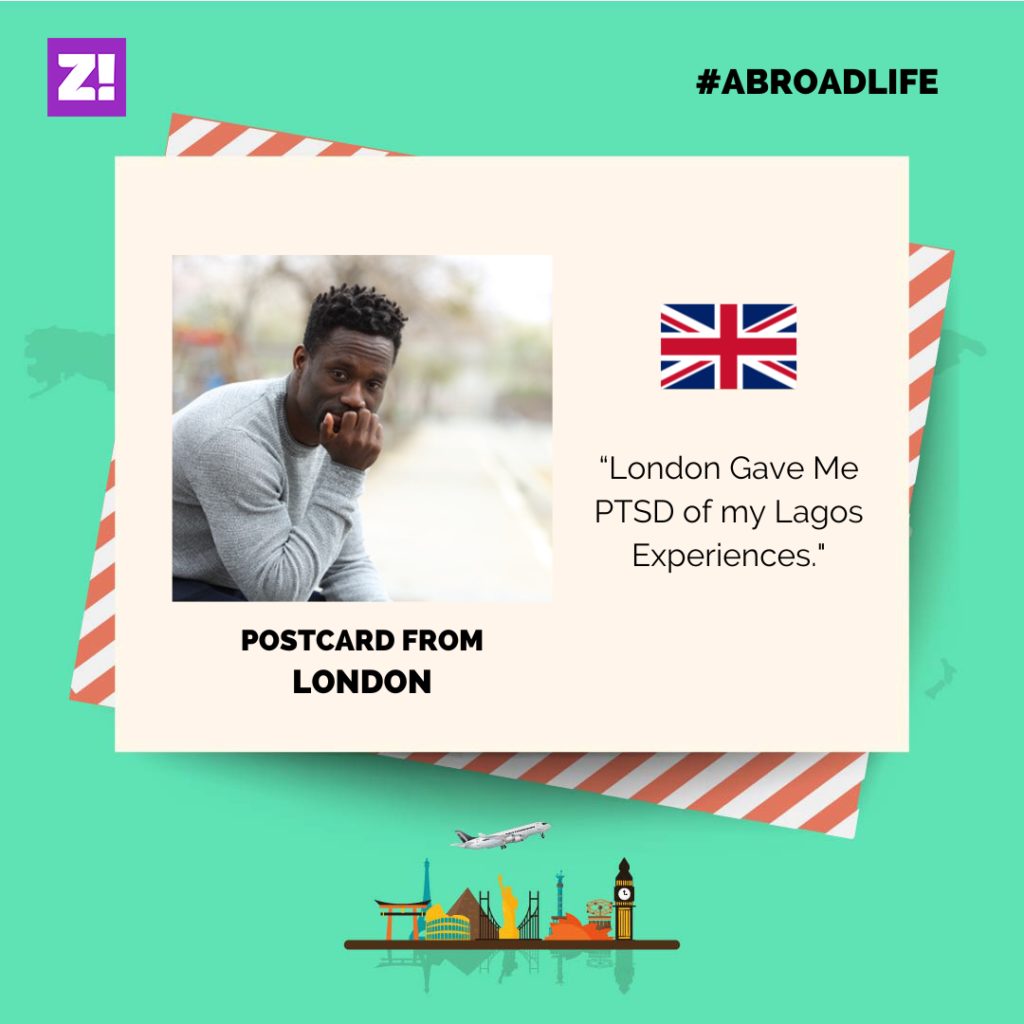
I can remember my first week in London. I needed someone to exchange currency with and the person was in Arsenal, so I had to travel there. I can remember seeing local brooms and people selling puff puff in London. It was crazy. It gave me PTSD of my Lagos experiences.
What are the challenges and advantages of living in London?
It can sometimes get lonely, especially if you don鈥檛 make friends easily. There was a time I stayed somewhere for a year and I didn鈥檛 even know who my next-door neighbour was. In Nigeria, when you move to a new place, before the next two days you know everyone on the block. I鈥檓 lucky I have my cousin here with me, as we both came at the same time. I don鈥檛 know how I鈥檇 have survived without my family. There is no way I can forget Nigeria in a hurry. I always keep up with current affairs from time to time.
However, you鈥檙e sure that nothing will halt your progress because they have systems that work. If you鈥檙e working a 12-hour shift, for instance, you can be sure that you will get paid your dues no matter what. No one is telling you that they can鈥檛 afford to pay your salary or you get half your salary like in Nigeria.
Also, if you work hard here, you’ll succeed. You can be sure of seeing the fruit of your labour. But in Nigeria, it鈥檚 not the case. It鈥檚 very risky to do business because you鈥檙e not sure of the next government policy that can strike it down. Like this naira redesign for instance, you see the way people are panicking. Things like that don鈥檛 happen here.
I鈥檝e noticed that Nigerians here also tend to do very well. This is because we are used to battling systems and external forces that are out to destroy our efforts. When one arrives with that anger and zeal, there is always the possibility of one doing better because those bad systems are almost non-existent. This is the biggest advantage here really.
Nigeria鈥檚 elections are less than two weeks away. Would you vote if you were in Nigeria?
I鈥檇 definitely vote if I were in Nigeria.
Did you know you鈥檇 not be able to vote from the UK? If you did, then why did you still leave?
I knew I鈥檇 not be able to vote. This wasn鈥檛 because of a lack of patriotism. I know that when I was doing my undergraduate studies back in Nigeria, I was in groups that advocated for better governance and sensitisation for citizens.
But it got to a point where I was almost going insane with everything going in Nigeria and I needed an escape. I still really love Nigeria and I still wish to come back. However, with Nigeria鈥檚 current state, I don鈥檛 see how it can benefit me at the moment. Also, I鈥檓 the only boy in my family. At some point, my parents will start expecting me to pay bills and do things that a 鈥榮on of the house鈥� should do. When you鈥檙e in Nigeria, paying bills, and your financial capacity isn鈥檛 growing anywhere, things will become difficult for you.
Who are you supporting in the 2023 elections, and how do you wish to show your support from abroad?
Funny enough, I supported the All Progressives Congress (APC) in 2015 over the People鈥檚 Democratic Party (PDP) because I felt PDP was enjoying a huge monopoly and needed some real competition, having been in power for the last 16 years. However, the APC came and made things even worse.
However, with the rise of a third-force party, I鈥檝e now become a supporter of Peter Obi, who鈥檚 under the Labour Party (LP). I believe he鈥檚 not part of the 鈥榠nner cabal鈥� of Nigerian politicians and, therefore, can bring in fresh ideas for Nigeria to become a better place. I鈥檇 love for him to be elected as president so that he can change the country and I can come back home. Nigeria is a sweet country to live.
As to how I鈥檓 showing my support, I鈥檓 making sure that my friends and family are 鈥極bidient鈥�. My dad, for one, was so surprised at my newfound political awareness. This is because my dad’s image of me whenever it comes to politics is forcing me to watch the 9 o鈥檆lock news back in Nigeria. But when I pitched Obi as the right candidate in one of my calls he was shocked, and so were my family members. So I can say that yes, I show my support by heavily endorsing Obi to everyone I know back home. I also make sure to always make my support loud for Obi on social media, especially on Twitter.