By Sanni Alausa-Issa
In the early 1970s, Nigeria鈥檚 economy grew rapidly despite just coming out of a Civil War. This was a result of an expansion in the country鈥檚 petroleum sector.
The revenue growth was so massive that the then Head of State, General Yakubu Gowon, , 鈥淢oney is not Nigeria鈥檚 problem. But how to spend it鈥�.

Decades later, this statement has been a source of controversy, and Gowon himself has had to explain what he meant. But that鈥檚 not our concern here. So first, let鈥檚 get some context on the Nigerian situation at the time. Shall we?

The Discovery of Oil
People who believe Nigeria鈥檚 discovery of oil is a curse may not be far from the truth. As we have witnessed, the wealth that oil has brought us has been the bane of our development.
The first discovery of oil was in 1956. Shell discovered it in Oloibiri, present-day Bayelsa State. As exploration continued, massive onshore and offshore crude oil deposits were found. As a result, Nigeria became one of the world’s largest oil producers.
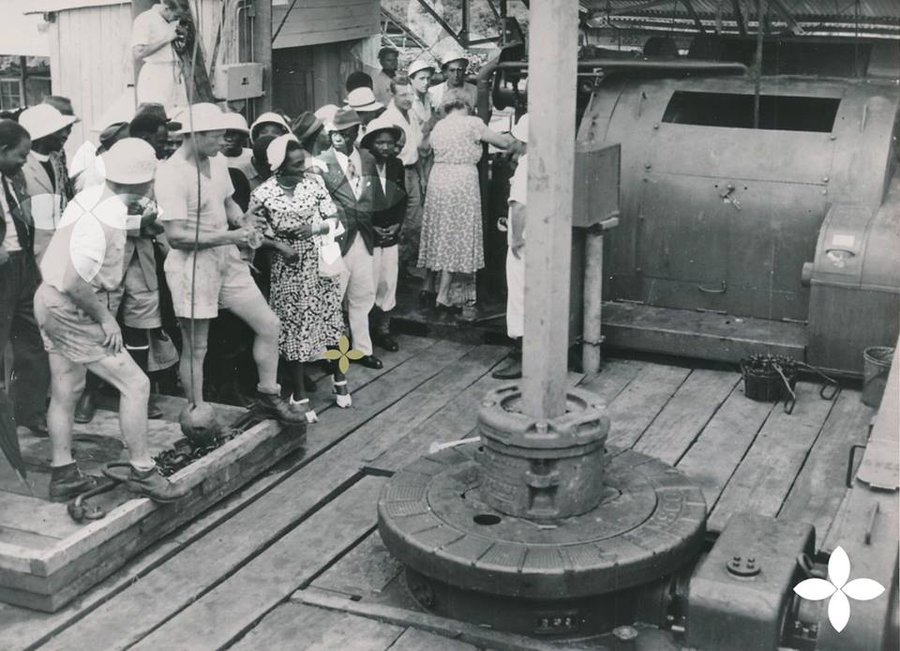
First test drilling for oil in Nigeria in Oloibiri, Imo State c. 1950 [Ukpuru]
Booming Oil
As oil production grew, Nigeria鈥檚 revenue increased exponentially. In 1958, the government鈥檚 revenue from oil was N200,000. By 1970, the revenue was N166 million. Just three years later, that number rose to $1.5 billion; in 1975, it .
Nigeria became the second-largest supplier of oil to the United States. But where was the money going?
The Mismanagement of State Resources
The Gowon government embarked on a series of infrastructural projects such as roads, universities, hospitals, office complexes, army barracks, hotels, factories, etc. To execute these projects, the government imported several million tonnes of cement from different countries, including the United States, Romania, Greece, and Spain. For example, the defence ministry ordered more than 16 million tonnes, despite requiring 2.9 million tonnes for its own projects.
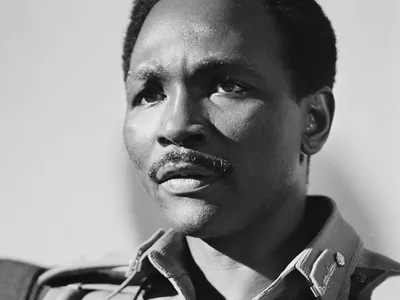
Yakubu Gowon, Nigeria鈥檚 former Military Head of State c.1970 [Britannica]
The surge in demand also meant that Nigeria paid more – $115 per tonne of cement. That was . As the cement arrived in Nigeria, it exceeded the capacity of the Lagos port, causing gridlock with over four hundred ships battling for dock space. For context, the Lagos port could only accept one million tonnes of cargo per year. This crisis later became known as the 鈥�.鈥�
Silent Video on Gen. Gowon’s Visit to Apapa Wharf to Inspect Col. Adekunle’s Work on Port Congestion | May 1970 [Adeyinka Makinde/YouTube]
Consequences
At the time, crude oil accounted for 92% of Nigeria鈥檚 exports. However, the neglect of other sectors of the economy, especially agriculture, resulted in economic crises years later. Moreover, Nigeria鈥檚 failure to properly invest the proceeds from the oil boom came back to haunt it when petroleum prices dipped between 1976 and 1979.
The handling of the oil revenue also created widespread corruption among government officials. Allocation of revenue and awarding of contracts were some of the means used by officials to steal state resources.
Just like the importation of cement, Nigeria also imported food items such as palm oil and groundnuts. This meant a reliance on food imports at the expense of the agricultural economy. With more money in the economy, consumption rose. This resulted in inflation. Between 1973 and 1981, food prices skyrocketed by 273%.
Lessons
The foundation of the problems Nigeria faces today was laid long ago. The oil boom of the 1970s was supposed to help us build an economy that should have sustained us for decades.
Today, Nigeria continues to heavily rely on oil revenues, which leaves the country vulnerable to unpredictable fluctuations in the price of petroleum. Also, the lack of quality leadership, pervasive corruption, and misplaced priorities have significantly hindered the nation鈥檚 progress, despite its wealth of resources.
To understand many of Nigeria鈥檚 problems, you need a wayback machine that takes you back in time because that鈥檚 where it all started.